How Yvette Marquez Built a Six-Figure Food Blog From Family Recipes
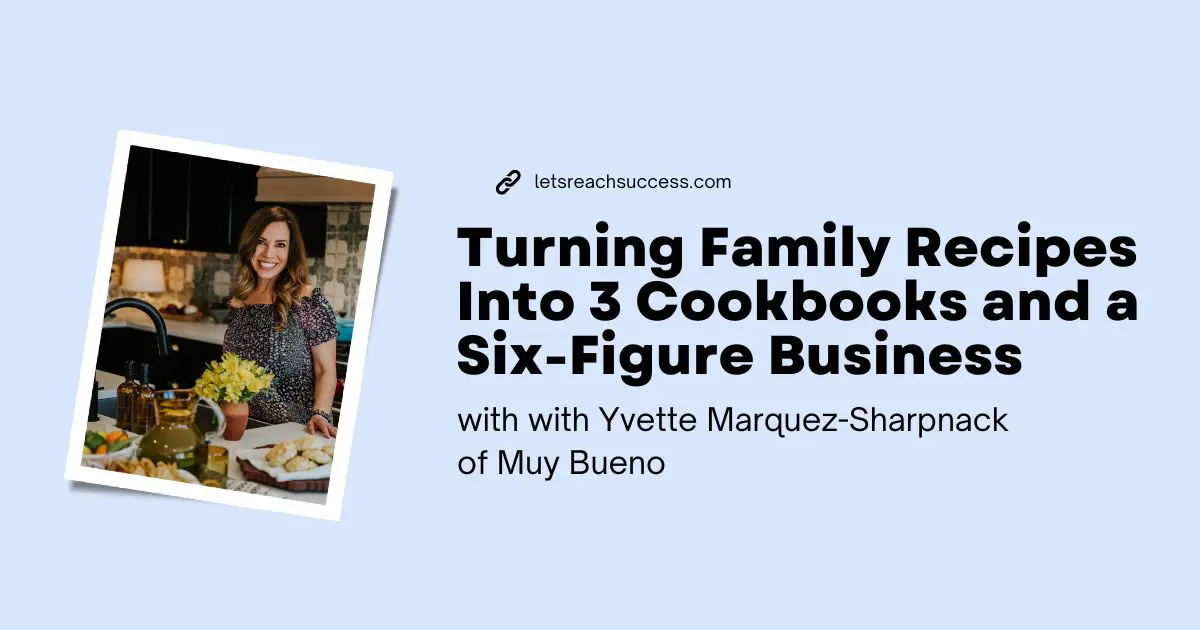
This is an interview with Yvette Marquez-Sharpnack of Muy Bueno.
Hey, Yvette! Tell us a bit about yourself and what you do.
I’m the founder of Muy Bueno, a Mexican food blog rooted in family recipes, border-town traditions, and the flavors I grew up with in El Paso, Texas.
I’m a full-time food blogger, content creator, and cookbook author passionate about preserving and sharing authentic Mexican cuisine through storytelling and approachable recipes.
Over the years, I’ve published three cookbooks, built Muy Bueno into a six-figure business, and have been featured in outlets like The New York Times, TODAY Food, NBC News, and Bloomberg.
Most recently, I competed on Food Network’s new show, 100 Cooks, which was such an exciting experience and a reminder that growth happens when you step outside your comfort zone.
Can you take us back to the moment Muy Bueno began?
Muy Bueno began as a spark of an idea in 2010.
My daughter was 8 years old, and my mom was visiting and cooking many of my favorite Mexican dishes. My daughter asked if these recipes were written down so that one day, when she went off to college, she could make them herself. She suggested I write a cookbook, and that simple question became the spark that ignited my journey.
As we cooked together, we kept saying “muy bueno” over and over while tasting the food, and it suddenly felt like a sign. The phrase was already deeply woven into my family memories because my grandma would lovingly welcome people into her home by inviting them to sit down and eat because the food was “muy bueno.”
It became more than just a phrase. It represented warmth, family, hospitality, and the joy of sharing Mexican food with others. That’s when I realized it was the perfect name for the blog I was beginning to build.
What did blogging look like for you in those early days?
In the early days, blogging was purely a passion project. I used it almost like a journal while working toward my dream of writing a cookbook. I never imagined a blog could turn into a real business.
At the time, I was working full time as a graphic designer and would work on my blog late at night after my kids went to bed and on weekends. About a year and a half later, I was laid off from my full-time job, and that’s when I truly hustled to make Muy Bueno work.
What was the first sign that the blog was really taking off?
In 2012, my income from brand partnerships totaled about $16,000. At the time, I thought I was rich. LOL. What people don’t realize is that my expenses were around $12,000, so it definitely was not enough to live on. But it showed me the business had potential.
Alongside building Muy Bueno, I was freelancing as a graphic designer, designing my future cookbook, working on another author’s cookbook, and contributing as a writer for other websites.
How long did it take before the blog started generating meaningful income? And where did that first revenue come from?
By around 2014, I started landing five-figure brand ambassadorships with companies like Target, Tabasco, California Strawberries, Avocados From Mexico, and Nestlé, just to name a few.
Then in 2015, I joined Mediavine for ad revenue. My first year with an ad network brought in around $8,000, and I was beyond excited knowing I could generate that type of passive income.
Looking back, it’s incredible to see how much that side of the business has grown. What started as a small additional revenue stream has now grown into a six-figure portion of my business.
It really showed me the power of building evergreen content and a strong content library that continues working for you long after you hit publish.
At what point did you realize this could become a brand and not just a blog? What action did you take then?
I think my background in graphic design and marketing gave me a huge advantage. Early on, I created a logo and built a niche brand identity without fully realizing how valuable that would become.
I was already pitching myself and Muy Bueno as a brand with media kits to magazines and clients.
Once my first cookbook was published and I started traveling for book signings and conferences, people began calling me “Muy Bueno” instead of Yvette. That’s when I realized the brand had truly taken on a life of its own.
Let’s talk about your content strategy. How do you decide which recipes to create and publish?
I have hundreds of recipes on my site. These days, I actually spend less time publishing brand-new recipes and more time updating older blog posts to make them stronger.
I focus on adding unique insights, cultural context, better technique guidance, and more expertise to help my content stand out.
What are your biggest SEO strategies today for food blogging?
I’ve never considered myself an SEO expert or someone who simply chases keywords. Writing strictly for SEO has honestly never come naturally to me.
Most of my recipes are rooted in family traditions, inspired by travel throughout Mexico, or created from genuine time spent experimenting in the kitchen. I’ve never focused on trends or tried to go viral.
That said, I absolutely understand the importance of SEO and have invested in SEO audits, strategy, and virtual assistants who specialize in that side of the business. I’ve learned that it’s important to balance optimization with authenticity.
Instead of chasing traffic alone, I’ve focused on building a trusted ecosystem around my brand through authentic storytelling, strong backlinks, meaningful press features, citations, and creating content that positions me as a real authority in Mexican cuisine.
I believe readers can feel the difference when recipes come from lived experience and real kitchens. At the end of the day, my goal has always been to share recipes I truly love and write them as clearly, helpfully, and honestly as possible for my audience.
Have recent Google algorithm updates affected your traffic?
Unfortunately, recent Google updates and the rise of AI Overviews have significantly affected traffic across the food blogging industry, including my own site.
Zero-click searches are changing how users interact with content online, and many creators are feeling that impact. I’m thankful I’ve built multiple revenue streams beyond ad revenue because it has reinforced how important it is to diversify your business and build an audience that extends beyond search traffic alone.
What do food bloggers misunderstand most about SEO?
I think many bloggers get too focused on writing for Google instead of building a true brand and community. It’s easy to stay behind the computer updating posts endlessly, but what really matters is building trust, building an audience, and creating loyal fans.
We need to connect with people through newsletters and social media and find ways to stand out, especially now that AI-generated content is flooding the internet.
What are your main income streams today?
Muy Bueno is a six-figure business. I actually talk openly about this on my Substack, Cocina to Career, because I think transparency is important.
- Show Me the Money: How I Actually Make a Living Online
- Spoiler Alert: My Cookbooks Don’t Pay the Bills
My income streams include:
- Ad revenue
- Brand partnerships
- Affiliate income
- Social media and Meta bonuses
- Cookbook sales
How did your cookbook deals come about?
I always knew I wanted to write a cookbook, whether that meant self-publishing or traditional publishing. As my blog and audience grew, followers became excited about the idea of a family cookbook, which motivated me to learn how to write a cookbook proposal and pitch publishers.
My first cookbook was published in 2012, before I even had a literary agent. I simply mailed and emailed my proposal to a handful of publishers until one finally connected with the project.
What role does affiliate marketing play in your business?
Affiliate marketing plays a smaller role in my business compared to ads and partnerships, but it still contributes.
I have an Amazon shop and work with LTK, typically earning anywhere from $200 to $1,000 per month. I mostly share affiliate links in my newsletter or occasionally on social media when there’s a product I genuinely love or something I’m excited to recommend.
How did you land your first brand partnership?
My first brand partnership came from IMUSA, a Hispanic cookware company. When I first started blogging, they would send me products and pay around $50 to develop a recipe and publish it on my blog.
At the time, I was thrilled and thought I had hit the jackpot. But once you factor in groceries, recipe development, photography, writing, publishing, and social promotion, you quickly realize $50 doesn’t go very far.
Eventually I started charging more, averaging around $300 per project, but even that still undervalued the amount of work involved.
Food bloggers today are essentially modern media companies. We are recipe developers, writers, photographers, stylists, editors, marketers, social media strategists, video producers, SEO specialists, and tech support all under one roof.
Creators need to value themselves accordingly because brands are not just paying for a recipe anymore. They are paying for years of expertise, audience trust, content production, and distribution across multiple platforms.
What do brands look for when working with creators today?
I think brands today are looking for authenticity. Some are chasing the largest audience, others care deeply about specific demographics, and some are simply looking for the best deal.
But overall, audiences are gravitating toward creators who feel real and relatable rather than overly polished. I’m personally still learning to embrace imperfection more in my own content.
What advice would you give bloggers who want higher-paying partnerships?
My advice to bloggers pursuing higher-paying partnerships is simple: ask for more.
Know your worth and understand that brands are hiring you to reach the audience and trust that you’ve spent years building.
Also read: How to Price Your Work on Value & Double Your Income This Month
Besides Google, where does most of your traffic come from today?
Besides Google, a large portion of my traffic today comes from direct traffic and email, which I’m actually really proud of because it shows people are intentionally returning to Muy Bueno instead of only discovering me through search.
That tells me readers trust the brand, come back for recipes, and stay connected through my newsletters and content updates.
Pinterest and Facebook still contribute traffic as well, though social media has changed dramatically over the years. I’m finding more value now in platforms where I can build deeper relationships and community rather than relying solely on viral content or algorithm-driven reach.
These industry shifts have really reinforced the importance of building an ecosystem instead of depending on one traffic source. Google can change overnight, but an engaged email list and loyal audience are something you truly own.
How can readers tell the difference between a real food creator and an AI-generated recipe site?
I’d like to consider myself a strong advocate for educating people about AI-generated recipes and food content. I’ve had the opportunity to discuss this in national press, including NBC News, where I explained how AI-generated recipes can completely miss the mark. I was also quoted in Bloomberg discussing how AI-generated summaries are already contributing to inaccurate and misleading food content online.
I always encourage readers to look deeper than just a pretty photo. Real food creators usually share personal stories, cultural context, step-by-step expertise, process photos, recipe testing tips, and years of lived experience behind the recipes they publish.
AI-generated recipe sites often feel generic, overly polished, and lack a true voice or connection to the food. Sometimes the ingredients or instructions simply do not make sense if you actually cook.
I think people should ask themselves: Does this recipe sound like it came from a real kitchen or from a machine pulling information together from the internet?
Readers deserve recipes that are tested, trusted, and created by someone who genuinely understands the cuisine they are sharing.
What platform are you most excited about right now?
Right now, I’m really loving Substack. To me, it feels like walking into a bookstore. It feels calm, thoughtful, and focused on writing and connection.
Instagram, TikTok, and Facebook can often feel like endless doomscrolling, while Substack has reminded many of us how enjoyable writing and reading can still be.
Do you think email is becoming the safest long-term platform for creators?
Yes, I absolutely think email newsletters are one of the safest long-term platforms creators can invest in.
Build your email list. Own your audience.
What made you start your Substack, Cocina to Career?
I started my Substack, Cocina to Career, because I genuinely love talking about business and sharing the behind-the-scenes realities of building an online brand.
I want to share the good, the bad, and the ugly. Running a full-time online business takes hustle, passion, and persistence, and I hope my journey can inspire others to pursue their own goals.
What are your favorite Substack features?
I really love the sense of community on Substack.
One of my favorite features has been Substack LIVE. I love either hosting or being invited onto LIVE conversations with other creators.
Honestly, it feels like the new version of Zoom mixed with a podcast. The conversations feel more intimate, thoughtful, and real compared to traditional social media.
What’s also great is that Substack does so much of the work for you. The LIVE sessions are automatically recorded, and the platform even creates clips you can easily share across social media, which helps extend the conversation beyond the app.
The kinds of conversations happening there are very different from what happens on my blog.
On my blog, readers come primarily for recipes and cooking tips. On Substack, people want the behind-the-scenes conversations.
We talk openly about business, burnout, AI, traffic changes, publishing, brand partnerships, creativity, and the realities of building an online brand. It feels much more personal and conversational, almost like sitting down for coffee with other creators and readers who truly want to connect on a deeper level.
What helped you grow to nearly 30K subscribers on Substack?
One of the biggest things that helped me grow my Substack was already having a loyal community that trusted me.
When I launched Cocina to Career, I was very transparent with my existing newsletter subscribers about why I was starting it, what kinds of conversations I wanted to have there, and how the industry was changing. I actually invited my existing subscribers over to Substack and made it very easy for them to opt out if it was not something they were interested in.
I think that’s the key lesson for creators: when you spend years building trust and genuine connection with your audience, people want to support you. They are not just following you for one recipe or one viral post. They are following you because they connect with you, your voice, and your story.
My advice for bloggers starting on Substack is to clearly communicate what readers can expect from you there. Don’t be afraid to invite your audience into a deeper conversation beyond recipes or surface-level content. Community and trust are everything right now.
You said the future belongs to creators building ecosystems, not just chasing pageviews. What does that ecosystem look like for you personally?
That could mean writing more cookbooks, launching a product line, hosting travel experiences, teaching cooking demos, or finding new ways to connect with your audience beyond a website.
I’m actually hosting a tour to Oaxaca this October, and experiences like that feel incredibly meaningful to me.
What worries you most about the rise of AI-generated food content?
What worries me most about AI-generated food content is the loss of trust and authenticity.
My approach is to keep learning, continue building relationships with other creators, collaborate more, attend conferences and retreats, and keep evolving alongside the industry instead of resisting change.
Is food blogging still worth pursuing today?
If someone asked me whether food blogging is still worth pursuing today, I’d probably encourage them to think more broadly about becoming a content creator rather than solely relying on traditional blogging.
I’d especially recommend platforms like Substack as a starting point for building an audience and voice.
What’s next for you and your business?
As for what’s next, I recently competed on Food Network’s 100 Cooks, which premieres June 7, and I’m incredibly excited for people to watch the show. It pushed me far outside my comfort zone, and I hope my experience inspires others to take chances on themselves too.
I’m continuing to grow Muy Bueno in ways that feel authentic to me. I’m expanding my Substack community, hosting culinary experiences like my upcoming Oaxaca trip, and quietly working on another cookbook project that is very close to my heart. I’m not ready to share all the details yet, but it feels like a full-circle moment that celebrates the recipes, stories, and traditions that built Muy Bueno from the beginning.
More than anything, I want to continue building a brand that goes beyond recipes. I want to create community, preserve culture, and show that sharing food can open doors you never imagined.