How Dan Grew His Travel Blog to 150,000 Monthly Pageviews
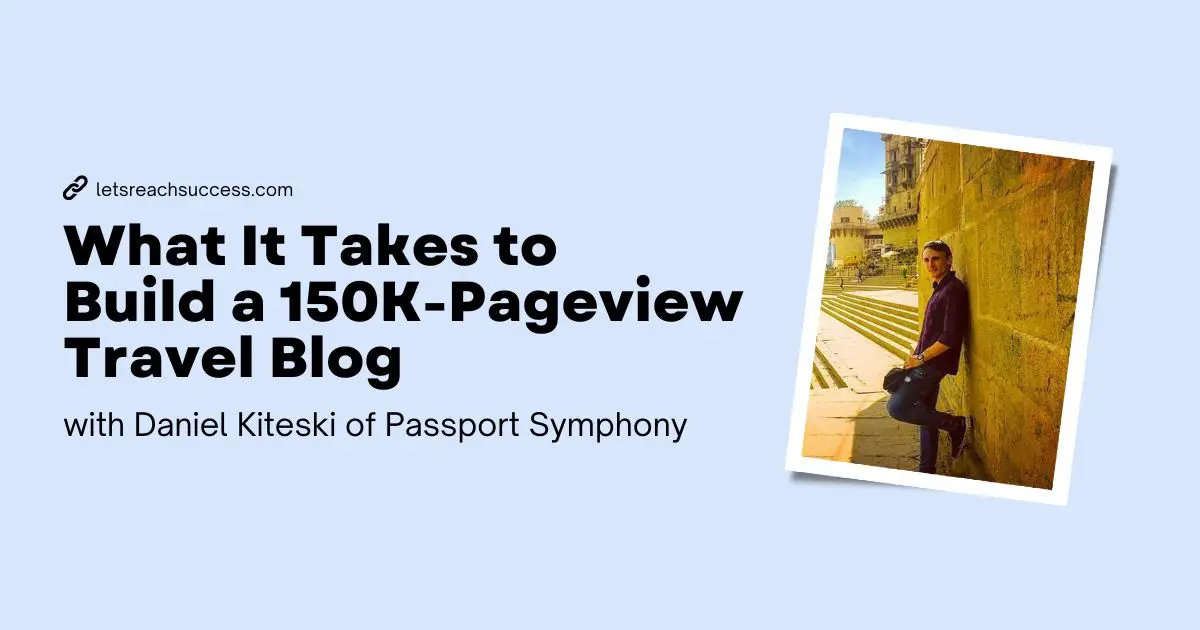
This is an interview with Daniel Kiteski of Passport Symphony.
Hey, Dan! Tell us a bit about yourself and what you do.
Hi Lidiya, first of all, I’d like to thank you for interviewing me and featuring me on your website. I would start this interview by sharing my favorite quote: “Travel is the only thing you buy that makes you richer.”
I’m a travel blogger and a globetrotter who has lived in 15 different countries, an avid explorer, and deeply passionate about discovering the stories, cultures, and hidden experiences that make each destination unique. From the bustling streets of Bangkok to the serene fjords of Norway, I’ve trekked the globe to bring my readers stories that inspire and awe…
When did you first start traveling seriously? How did you fund your travels before the blog became profitable?
My first extended overseas trip was in 2016. I created the blog in 2017, and it started to generate income in 2018.
By 2019, it was earning enough to cover my travel expenses. Meanwhile, I was able to get a few jobs in other countries, such as the US, India, Russia, and Thailand.
At the time, my career allowed for a lot of travel, which was great, as I had the opportunity to visit many places that I could later write about.
What made you decide to start Passport Symphony?
I started Passport Symphony to showcase my travel style and inspire others to do the same (or something similar) – to go beyond the typical tourist places, discover hidden places, authentic cultural experiences, and meaningful local connections.
In the last ten years, I have lived in 15 countries and traveled extensively, and some of the most memorable experiences have been in the places where I have gone deeper and learned more about the cultures and communities that I have encountered, rather than in rubbing elbows with other tourists at popular tourist attractions and over-priced luxury resorts.
How long did it take before the blog started covering your travel expenses?
Well, it took about 2 years, but just as that started happening, the global pandemic shook the world, travel interest and advertising disappeared for a few months, and around this time, I started my other blog, thefoodhog.com, in an attempt to diversify away from the travel industry.
That worked out. This website grew even faster than the first one, things went back to normal, and after the pandemic, the earnings from these two blogs were enough to sustain me and my lifestyle.
What were those first blogging years actually like in terms of traffic and income?
They were actually rather good, better than I ever expected.
I think that 2017-2022 was the Golden Age of blogging. At the time, I was still focused on my career in business administration and consulting, and I started the travel blog as a hobby because writing helped me relax at the time.
I got the first viral article (about my experience about living in India) in only a few months, and my blog was one of the first to cover “hidden gems” in different destinations on a massive scale.
I found my niche – covering places for people who want to get off the beaten track and avoid the main tourist experiences. I built the website around it, and success followed.
What traffic strategies worked best for you in the beginning versus now?
The first thing that worked for me was to concentrate on SEO-based content.
I concentrated primarily on long-tail keywords and less competitive destinations (fewer searches). The content I usually wrote featured hidden gems in various places, local experiences, and budget travel tips for places that weren’t necessarily mainstream, at least at the time.
Pinterest also contributed to early traffic, especially for destinations that are visually appealing and itinerary content. I was also spending a lot of time in travel forums, Facebook groups, and online communities, and I was really interacting with travelers, not just promoting my content.
The strategy is different today and much more diversified. While SEO remains relevant, I’m more interested in topical authority, experience-based content, and brand-building on as many channels as humanly possible.
What types of content perform best for you?
I still mainly focus on trying to discover hidden gems across the destinations I visit, but that task is becoming ever so harder.
There are a lot more blogs that follow a similar approach these days, and the real “hidden spots” rarely remain hidden because there are so many bloggers who cover them.
Are there any SEO mistakes you see travel bloggers making constantly?
One of the biggest mistakes I see is creating generic content that adds little to no value compared to what can already be found online.
I’ve seen quite a few travel bloggers chasing high-volume keywords without offering firsthand insight or a clear angle that differentiates their content in any meaningful way.
My advice is to make a goal to bring something new that doesn’t already exist on the internet with every article you write. It’s a difficult task, I know, but that’s the way I try to do it.
How diversified are your traffic sources today?
Today, my traffic sources are pretty diversified. Only about 40% of traffic comes from Google and other Search Engines.
Pinterest is another important traffic source that brings about 30-35% of the traffic.
The rest is other social networks, channels, and online communities, including Facebook, Reddit, Quora, TripAdvisor, Fodor’s, etc.
How important is personal branding in travel blogging today?
I think it is very significant. I believe today readers aren’t just following destinations, they’re following people they trust. With all of the travel content out there, personality, perspective, and authenticity is what sets one travel blogger apart from another.
Especially in the wake of recent algorithm updates in search and social media, audiences are drawn to creators with a distinct voice, niche, and authentic first-hand experience. People want to know who is behind the recommendations, why they travel the way they do, and if their style is similar to their own interests.
Are display ads still worth it for travel bloggers?
Yes — ads are still very much worthwhile for many travel bloggers, particularly when you have enough traffic to be eligible for premium networks like Mediavine. But for smaller publishers with not enough traffic to get their websites submitted in these exclusive networks, earnings from Google Ads can be abysmall.
However, display ads are one of the more consistent passive income streams for a lot of established travel sites, including myself, as you get paid just for readers consuming content, regardless of whether they make a purchase or not.
Also read: How Kylie Got into Mediavine in 1 Year & Makes €5K/Month from Her Blog
How important are affiliate partnerships in your business?
Probably the second most important thing after display ads.
The beauty of affiliate marketing in the travel industry is that it can be seamlessly woven into valuable content, such as hotel recommendations, travel insurance, transportation, tours, or travel gear.
If the recommendation is genuine and based on experience, it tends to convert much better than salesy content.
Also read: Boost Your Blog Income: Top 6 Affiliate Programs You Can’t Miss
Are you comfortable sharing traffic and income numbers (+ income streams) from your blog today?
I’m not going to lie, the income from travel blogging can vary significantly from season to season, ad rates, and search traffic, so I like to give ranges instead of exact numbers.
The blog currently gets between 50,000 and 150,000 pageviews per month.
Revenue also fluctuates from month to month, but the business makes money in the mid to high four figures per month, and can go up a lot during peak travel times or during high traffic months.
Right now, the biggest and most reliable revenue stream is display advertising via Mediavine, followed by affiliate partnerships, sponsored collaborations, and a few consulting or freelance projects related to the travel industry.
How have you changed your content strategy because of AI search?
AI search has pushed me to focus much more heavily on firsthand experience, originality, and depth rather than producing large volumes of search-driven content.
Basic informational travel queries are increasingly being answered directly by AI summaries that now appear in searches without the user even clicking, so content that simply repeats widely available information has become much less valuable.
For this reason, I’ve been focusing more on writing more experience-based articles that include personal anecdotes, secret spots, cultural context, practical information, and special recommendations that can’t be easily generated by AI.
I also work to improve older content, but that’s honestly not easy because I have over 400 articles (just on my first website), and use strictly original photography, local observations and practical tips based on real-life experience.
How has your definition of “dream lifestyle” changed over the years?
My initial concept of a dream life was to be on the move, visiting as many countries as I could, seeking out new experiences, and being able to work anywhere. Then, travel was the objective. As time went on, my definition evolved into a more well-rounded and purposeful one.
I have learned that travel without a break can be tiring, and that stability, purposeful routines, healthy relationships, and a sense of home are as important as adventure, having lived in 15 countries.
For me, the “dream lifestyle” isn’t about being constantly on the go; it’s about having the freedom to live and work the way I want to, while still being able to connect with the cultures, people, and experiences that genuinely inspire me.
What do you think travel blogging will look like in the next 5 years?
I think travel blogging over the next five years will look much less like traditional “blogging” and much more like building a personal media brand.
The days of relying purely on Google traffic and generic destination guides are fading quickly, especially with AI answering basic travel questions directly in search results.
The creators who will thrive are the ones offering something AI can’t easily replicate — firsthand experience, personality, storytelling, local knowledge, trust, and unique perspectives.
I think we’ll see a major shift away from mass-produced SEO content toward more experience-driven and creator-led travel media.
Do you think smaller bloggers still have a chance to grow today?
Yes, but I think the path is very different from what it was a few years ago. Smaller bloggers can still grow, but competing by publishing generic SEO content at scale is much harder today, especially with large media sites and AI-generated content flooding search results.
What still works well for smaller creators is having a clear niche, a distinct voice, and genuine firsthand experience.
In many ways, smaller bloggers can actually have an advantage because audiences are increasingly drawn to authenticity and personal perspective rather than overly corporate-style travel content.
What’s next for you and your blogging business?
My primary focus at the moment is to continue evolving my blogs into a more personal media brand that focuses on cultural travel, hidden destinations, and authentic experiences. I want to continue to produce more experience-based content, storytelling, and community-based content.
I’ve also started to diversify my earnings from blogging a little bit. Since last year, I’ve branched out into video and started a channel in a totally different niche on YouTube, and it’s been a refreshing experience it terms of how it impacts my creativity.
But it’s also been strategically valuable from a business perspective. It helped me understand a lot more about audience building than just search traffic, and it helped me understand that you shouldn’t be dependent on one platform.
Meanwhile, I’ve also increasingly leaned into my formal background in finance and have been actively investing more money in financial markets (mainly in the US but also in emerging markets). A big chunk of my blogging income goes there, and I’ve been lucky to say I’ve been able to multiply my net worth over the course of the last few years.
It’s an interesting complement to the entrepreneurial aspect of blogging in many ways — both blogging and investing involve long-term thinking, adaptability, risk management, and staying calm in times of volatility.
My long-term objective is actually to create freedom and sustainability in a variety of income streams, not just one industry or platform. In the digital age, that diversification is now more crucial than ever.